A concrete patio is one of the best “use it every day” upgrades you can make in Bryan—until it starts holding water, settling at the edge, or cracking in ways you didn’t expect. The Brazos Valley isn’t gentle on flatwork. We’ve got expansive clay, hard downpours, and long heat that bakes moisture out of the ground. Concrete can absolutely hold up here, but only if the plan matches the conditions.
If you’re looking for where Top-Notch Outdoor Services works around town and the surrounding area, start here: Brazos Valley service area.
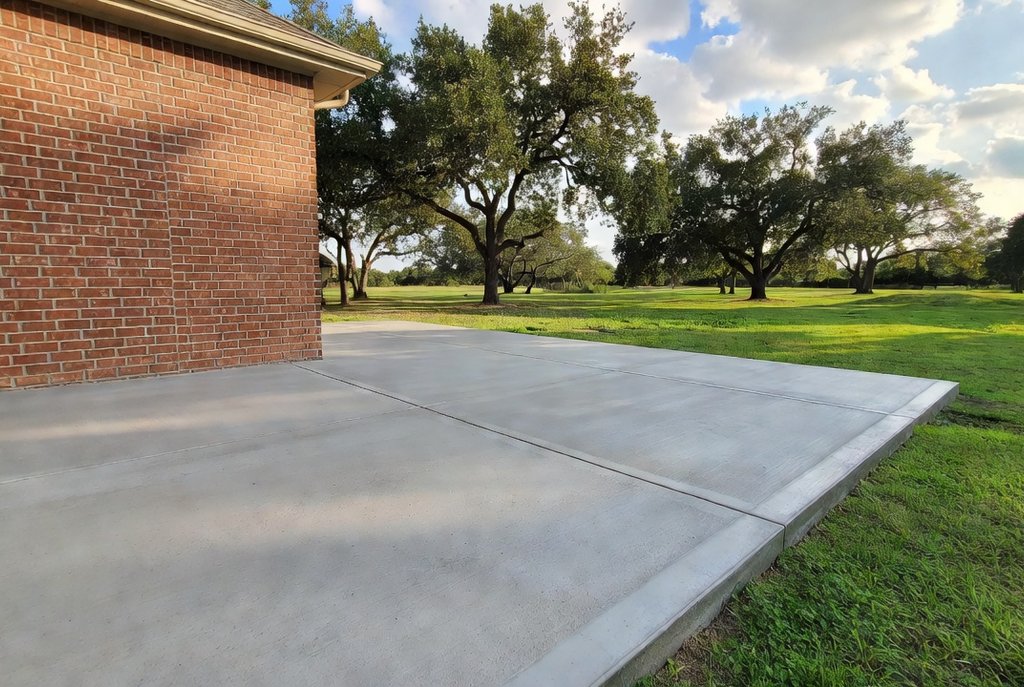
The Bryan reality: clay soil moves, and concrete doesn’t like surprises
Here’s the straight talk: most patio problems aren’t “bad concrete.” They’re soil and water problems showing up through concrete.
In Bryan, clay soil swells when it’s wet and shrinks when it dries. That movement can create: - settling at the outside edge (especially where runoff softens the subgrade), - heaving in spots after wet periods, - and cracks that telegraph soil movement, not necessarily “weak concrete.”
That doesn’t mean you should avoid concrete. It means you should treat base prep and drainage as part of the project—not optional add-ons.
Slope and drainage: the part homeowners notice first (and hate most when it’s wrong)
A patio should shed water predictably. If it doesn’t, you’ll see it fast: - puddles that never quite dry, - slick algae in shaded corners, - water running toward the house or pooling at the slab edge.
Two practical points that matter in Bryan: 1. Plan the water path before you pour. Where does roof runoff go? Where does the yard already hold water after a storm? Concrete doesn’t “fix” low areas—it can make them more obvious. 2. Avoid trapping water between the patio and the house. In clay country, repeated wet/dry cycles near a foundation are a bad habit to build into your landscape.
Sometimes the honest answer is: a patio needs a little regrading, downspout routing, or a drain solution to work the way you want. If you already fight standing water, it’s worth handling that at the same time instead of hoping the new slab will magically behave.
Base prep: boring, invisible, and what separates “fine for now” from “fine for years”
People love to talk about finishes and color. The base is what keeps a patio from acting like a diving board in five seasons.
What you want under a concrete patio in our area is: - a properly prepared subgrade (not poured over fluffy soil), - compaction that’s actually consistent, especially along edges, - and a plan for soft spots, tree roots, and fill areas (common on newer lots).
If part of the patio is over undisturbed ground and part is over backfill, expect differential movement unless it’s addressed. That’s not a scare tactic—it’s just how soil behaves.
Control joints and cracking: you can’t prevent all cracks, but you can control where they go
Concrete cracks. The goal is to make cracking predictable and less visible.
That’s where joint layout matters: - Control joints give concrete a “permission slip” to crack in straight, planned lines. - Random cracking often comes from too few joints, poorly placed joints, or a layout that ignores stress points (corners, re-entrant angles, transitions at steps, etc.).
If you want a clean look, this is where design helps: simpler shapes and smart joint patterns usually look better long-term than a complicated outline with lots of tight corners.
Finish choices in Bryan: smooth looks great—until it’s wet (or 105°F)
Finish is about function, not just style.
- Broom finish: not fancy, but it’s popular for a reason—better traction when it rains.
- Too-smooth finishes: can get slick, especially in shade where algae can develop.
- Color/stain: can look sharp, but it also raises expectations—dust, pollen, and hard water spots show more. (Bryan gets plenty of all three.)
Also: a concrete patio in full sun will get hot. That’s not a defect; it’s physics. If heat is a concern, shade planning (trees, pergola, umbrella zones) matters as much as the slab.
Timing and curing: Texas weather can help you or hurt you
Our weather swings are real: sudden storms, high humidity, and heat that pulls moisture out of fresh concrete fast.
A few practical cautions: - Rain during finishing can ruin the surface. Planning around the forecast matters. - Heat and wind can dry the surface too quickly, which is when you can get surface issues that don’t show up until later. - Give it time before heavy use. Your patio isn’t just “done” when it looks dry—strength develops as it cures.
When a concrete patio is the right choice (and when something else may be smarter)
Concrete is a great fit when you want: - a clean, durable surface for furniture and grilling, - a stable pad for outdoor living space, - and a long-term upgrade that’s easy to maintain.
But if you have extreme soil movement, lots of roots, or you want a surface that “forgives” shifting better, dry-laid stone can be a better match in some situations. The right answer depends on the yard. A rigid slab and expansive clay can get along—but only when the prep, joints, and drainage are handled seriously.
Top-Notch Outdoor Services pours concrete patios, pads, and driveways across Bryan–College Station and the surrounding Brazos Valley. If you want an honest assessment of your site—especially drainage and soil movement—schedule a consult or call (979) 286-6555.