Fall lawn prep in Madisonville is less about making the yard “perfect,” and more about setting it up to survive winter and bounce back fast in spring. In the Brazos Valley, you’re dealing with heavy clay, surprise rain events, and warm spells that come and go—so the usual “do X on this date” advice doesn’t always fit.
If you want the quick “where we work” version, start here: Madisonville service area.
What makes fall lawn prep different in Madisonville
Straight talk: your lawn doesn’t quit growing on a clean schedule here. You can get a cool snap, then a 85°F week, then rain, then drought. That’s why fall prep is mostly about reducing stress and preventing problems that show up later.
A few local realities to plan around:
- Clay compacts easily. Summer traffic + mowing when it’s a little too wet = tight soil and weak roots.
- Leaves can smother warm-season grass fast. Especially under oaks and pecans—shade + leaf cover is where thinning starts.
- Water doesn’t “soak in” quickly. If you already have low spots, fall rains make them obvious (and messy).
Step 1: Adjust mowing—don’t scalp, don’t “quit” too early
Most Madisonville lawns are warm-season grasses (Bermuda, St. Augustine, zoysia). In fall, the goal is to keep enough leaf blade to feed the roots, while not letting it get so tall that it mats down.
Practical rules that hold up:
- Keep following the 1/3 rule. Don’t take off more than about a third at a time, even if growth slows.
- Mow based on growth, not the calendar. Some weeks you won’t need it; other weeks (especially after rain) you will.
- Keep blades sharp. Ragged cuts going into cooler, damper weather can invite disease and just look rough.
One common mistake: doing one last “super short” cut to be done for the season. That can expose soil, weaken the turf, and make winter weeds more likely.
Step 2: Water smarter as temperatures drop (and watch for runoff)
In clay, watering is always about soak vs. runoff. In fall, it’s easy to overwater because the lawn isn’t drying out as fast as it did in August.
A simple approach:
- Water less often, but deeply when you do. The point is to support roots, not keep the surface constantly damp.
- Water in the morning. Cooler nights + damp grass is where fungus can hang around.
- If you see water moving, stop. Let it soak in, then continue later. Runoff doesn’t help your lawn.
If an area stays soggy for days after rain, that’s not a “watering” issue—it’s usually grade/drainage/compaction.
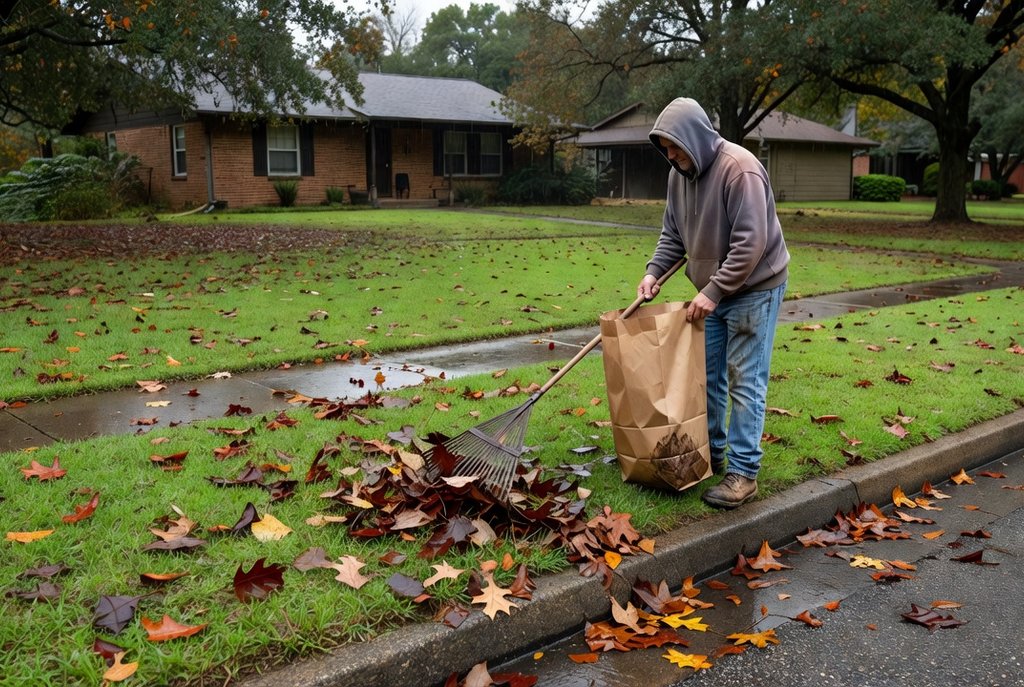
Step 3: Stay on top of leaves (this matters more than people think)
Leaf cleanup isn’t just about looks. Leaves block sunlight and trap moisture, which can thin turf and create bare spots that show up in spring.
What works:
- Don’t let leaves sit in piles. A little mulch-mowing is fine in small doses, but heavy leaf drop needs removal.
- Pay attention to shaded zones. Under trees and along fence lines is where grass loses the fight first.
- Clean out corners and edges. That’s where damp debris builds up and grass stays weak.
If you only do one fall prep task, do this one.
Step 4: Handle compaction and mud now (before winter makes it worse)
Clay gets rutted and lumpy when it’s wet. Once it dries, those ruts can “lock in” and stay annoying until you fix them.
Fall is a good time to:
- Avoid mowing when the yard is squishy. If you’re leaving tracks, you’re compacting the soil.
- Fix gate-path mud. High-traffic choke points (by gates, trash cans, AC units) are where lawns get destroyed.
- Look for downspouts dumping into turf. If roof water is blasting one spot, that spot will never be happy.
Sometimes the best “lawn prep” is simple: extend a downspout, regrade a low spot, or add a drainage solution so the grass isn’t trying to grow in a swamp.
Step 5: Decide what you want to do about winter weeds (and be honest about tradeoffs)
Winter weeds usually win where turf is thin. Your best defense is a thick, healthy stand of grass going into dormancy—good mowing height, decent roots, and not being smothered by leaves.
You’ll also hear about overseeding for winter color. It can look great, but here’s the tradeoff: overseeding can complicate spring green-up for warm-season lawns and adds maintenance (mowing a “winter lawn” you created).
If you’re considering it, ask yourself: - Do you want winter green badly enough to mow through winter? - Are you okay with a slower spring transition? - Is the lawn healthy enough to handle it?
No shame in skipping it—most homeowners are happier with a clean, dormant lawn than a high-maintenance winter project.
When it’s worth calling for help
DIY is totally fine if you’ve got the time. Hiring help tends to be worth it when:
- leaf drop is heavy and you’re losing the lawn under trees,
- the yard gets away from you during fall rain bursts,
- you want the property to look “reset” going into the holidays,
- you’re dealing with low spots, muddy paths, or recurring soggy areas.
Top-Notch Outdoor Services handles mowing, edging, and seasonal cleanups across the Brazos Valley. If you want a practical plan for your Madisonville yard (no hype—just what’s worth doing), call (979) 286-6555 or schedule a consult.