Fence installation in Caldwell isn’t complicated—but it is easy to get wrong if you build like the ground never moves and the weather stays mild. Around the Brazos Valley, we deal with expansive clay, big rain events, and long stretches of heat that dry things out fast. That combination is why you see fences that look fine at first, then slowly start leaning, rippling, or dragging at the gate.
If you want the quick “where we work” version, start here: Caldwell service area.
What’s different about installing a fence in Caldwell
Straight talk: most fence failures aren’t because the boards were “bad.” They’re because the fence was set up to lose a fight with soil and water.
Three local realities matter:
- Clay expands and shrinks. Wet months push up and sideways; dry months pull away and leave gaps. Posts set shallow (or set casually) get worked loose over time.
- Sun and humidity beat up wood. UV checks and warps boards, and humidity keeps shaded areas damp longer—especially near grade.
- Storms test the structure, not the looks. A long run acts like a sail in high winds. If corners, ends, and gate posts aren’t built stout, movement shows up there first.
Picking the right fence type: match it to the property, not the photo
In and around Caldwell you’ll see everything from tight residential lots to bigger rural properties. The “right” fence depends on what you actually need it to do.
Common options and honest tradeoffs:
- Wood privacy: Great for screening and looks. It also catches wind and needs solid posts, corners, and maintenance. Wood moves as it dries—expect some seasonal change.
- Chain link: Practical, good airflow (less wind load), and typically lower-maintenance. It won’t give privacy, but it’s hard to beat for function.
- Ornamental/metal: Clean look and good visibility. It still needs strong posts and good layout so panels stay aligned as the ground shifts.
- Gates (walk/drive): The gate choice should be driven by usage. If you’ll use it daily, build it like equipment—not decoration.
Also: before you fall in love with a design, think about dogs, mower access, trash day access, and where you’ll want a gate when it’s 105°F and you’re carrying something heavy.
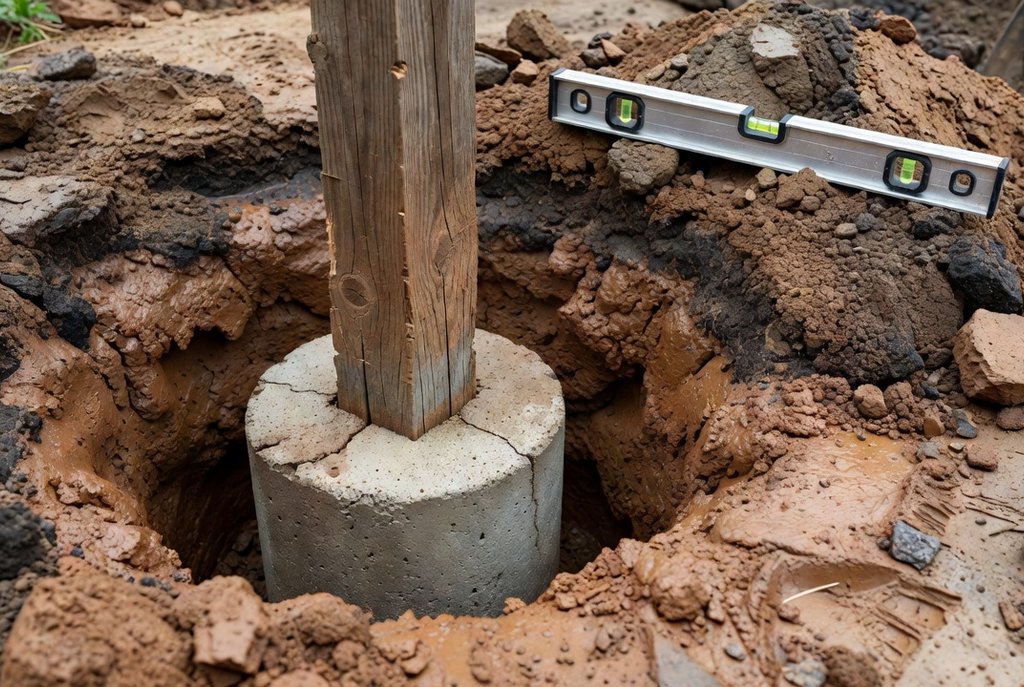
Posts and footings: the part that decides whether your fence stays straight
Pickets and panels are the “pretty part.” Posts are the fence.
What matters in Caldwell clay:
- Depth and consistency. If one section is set deeper than the next, the fence won’t move as one unit.
- Corners and ends built to resist pull. Long runs need strong termination points, or they slowly rack out of line.
- Gate posts oversized for the load. Gates put constant leverage on posts. Undersized gate posts are why “new” gates start sagging.
And one practical reminder: call 811 before digging. It’s free, and it prevents a fence project from turning into a utility emergency.
Gates: where “almost good enough” turns into daily frustration
If you want to predict how a fence will feel to live with, focus on the gates.
Problems we see when gates are built light:
- sagging that turns into dragging,
- latches that stop lining up after the first wet/dry cycle,
- tight clearances that don’t tolerate soil movement or debris buildup.
A good gate install plans for real life: slight movement, mud after storms, and the fact that you’ll want it to swing freely without having to lift it.
Water and grade: don’t build a fence into a drainage problem
Water is the silent fence-killer—especially at the bottom of posts and along fence lines where soil stays damp.
A few things to watch on Caldwell properties:
- Low spots that pond after rain: standing water shortens the life of wood and can shift posts faster.
- Downspouts dumping at the fence line: that’s a recipe for soft, wet soil around posts.
- Soil/mulch piled against pickets: it traps moisture and invites rot. Keep the bottom edge able to dry out.
Sometimes the best “fence upgrade” is a small grading tweak so water stops living where your posts are trying to stay solid.
Questions worth asking any fence installer (including us)
Before you hire anyone, get clear answers to these:
- How are you setting posts for expansive clay—especially corners and gate posts?
- What’s your plan to keep wood off constant ground contact and improve airflow near grade?
- How will the fence handle wind load (privacy fences in particular)?
- Where will water go after the install—along the fence line and at gate areas?
- Are we aligned on the property line and gate placement before digging starts? (If there’s uncertainty, sort it out up front.)
Top-Notch Outdoor Services installs, repairs, and replaces fences and gates across Caldwell and the Bryan–College Station area. If you want an honest take on what fence style makes sense for your lot—and what details are worth paying attention to—call (979) 286-6555 or schedule a consult.