Hearne lawns can look great, but they’ll humble you fast if you treat them like “generic Texas grass.” Around the Brazos Valley, the combo of expansive clay, big rain events, and long heat changes what actually works. The goal isn’t a magazine lawn 12 months a year—it’s turf that stays thick enough to crowd out weeds, recovers after storms, and doesn’t fall apart in August.
For the quick “where we work” version, start here: Hearne service area.
What’s different about lawn care in Hearne
Straight talk: most lawn problems here aren’t caused by one bad mow. They’re caused by water + soil + timing.
A few Hearne realities to plan around:
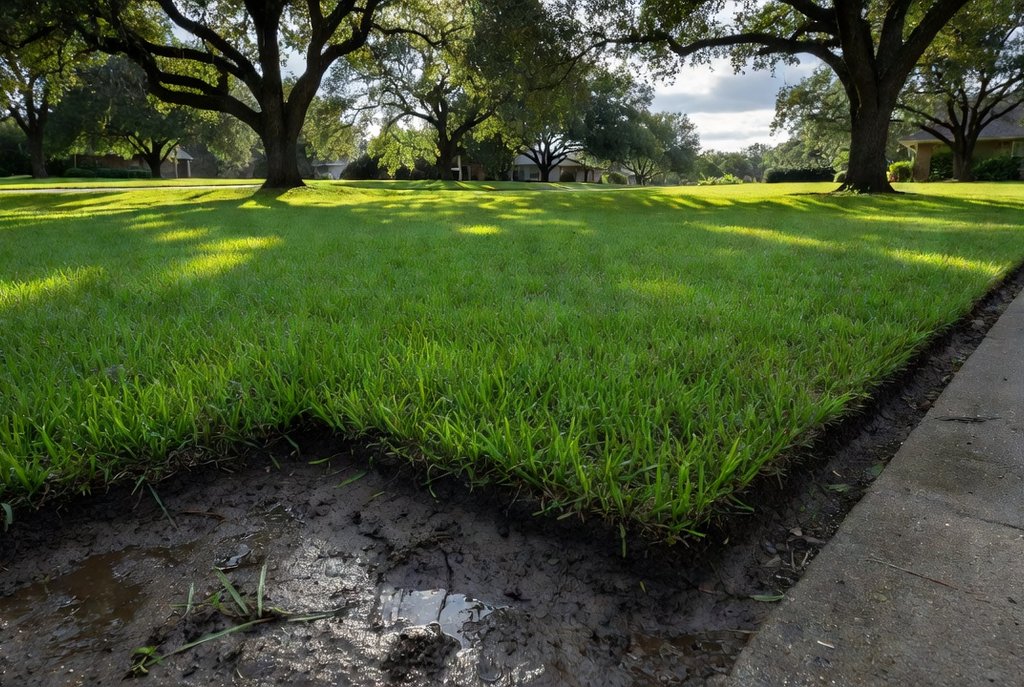
- Clay holds water, then turns rock-hard. After a downpour, you can have soggy ground for days. Then a hot stretch bakes it dry and tight.
- Rain comes in bursts. You’ll see growth spurts right after rain, then slow growth (and stress) when it shuts off.
- Humidity raises disease pressure. If you water late in the day or cut too low, fungus can show up quickly—especially in shaded areas.
If you only remember one thing: don’t fight the weather—work with it.
Mowing: height and timing beat “every Saturday”
In our climate, mowing is less about a rigid schedule and more about not making the grass struggle.
Practical rules that hold up in Hearne:
- Don’t scalp. Cutting too short exposes soil, spikes evaporation, and invites weeds. Taller grass shades the ground and protects roots.
- Follow the 1/3 rule. Try not to remove more than about one-third of the blade at a time. If the lawn gets ahead of you, cut high first, then come back a few days later.
- Mow when the ground can carry you. If your footprints squish or you’re leaving ruts, wait. Ruts in clay don’t “fluff out” on their own.
- Sharp blades matter more in humidity. Torn tips look gray and can increase stress and disease risk.
Also: a clean-looking lawn is usually edges and trimming, not mowing it shorter. Crisp edging along sidewalks/driveways makes an average cut look deliberate.
Watering on clay: slow soak, less often
Clay will absorb water—but it has a limit. If you water too fast, you’re not “watering the lawn,” you’re watering the street.
A simple approach:
- Water slower and longer, then let it rest. Deep watering encourages deeper roots and better drought tolerance.
- Watch for runoff. If you see water moving, pause and let it soak in before continuing.
- Morning is your friend. Watering early gives the grass time to dry. Evening watering + humidity is where fungus likes to live.
One honest point: you can’t irrigate your way out of bad drainage. If a low spot stays wet after storms, the real fix is often grading or drainage—not more watering.
Weeds and thin spots: treat the cause, not just the symptom
In Hearne, weeds usually take over for a reason:
- the lawn was cut too short and soil got sun-baked,
- an area stays too wet (downspouts, low spots),
- soil is compacted and roots can’t breathe,
- or the grass is in too much shade for the type you’re trying to grow.
Before you buy products or start guessing, do this instead:
- Map the pattern. Along a fence line (shade/traffic)? Near a downspout (too wet)? In the middle (scalping/compaction)?
- Fix mowing and watering first. That alone often reduces weed pressure over a few weeks.
- Address compaction where water puddles. Compacted clay stays wet on top and dry underneath—worst of both worlds.
And for shady zones under big trees: sometimes the practical win is adjusting expectations (or converting a struggling strip into a bed) instead of re-fighting the same losing battle every summer.
A seasonal plan that makes sense in the Brazos Valley
You don’t need a complicated program—you need the right priorities at the right time.
- Spring: Cleanup, first cuts, edging, and getting ahead of growth spurts after rain.
- Summer: Raise your mowing height, keep blades sharp, and focus on stress reduction (not pushing the lawn hard).
- After big rains: Wait for the ground to firm up before mowing; check for pooling water and muddy gate paths.
- Fall: Leaf cleanup and a “tighten it up” mow/edge so things look neat going into slower growth.
This is also when a seasonal cleanup & refresh can make the whole property look reset without trying to force perfect turf through extreme weather.
When hiring lawn care is worth it (and when it isn’t)
If you like mowing and have the time, DIY can be totally fine. Professional lawn care tends to pay off when:
- your lawn grows fast after rain and gets away from you,
- you travel or work long hours and need consistency,
- you want clean edges and details without spending weekends on it,
- you’re trying to recover from an overgrown or stressed season.
Top-Notch Outdoor Services handles mowing, edging, seasonal cleanups, and spring refreshes across Hearne and the surrounding Brazos Valley. If you want an honest, practical plan for your yard (and straight answers about what’s worth doing), call (979) 286-6555 or schedule a consult.