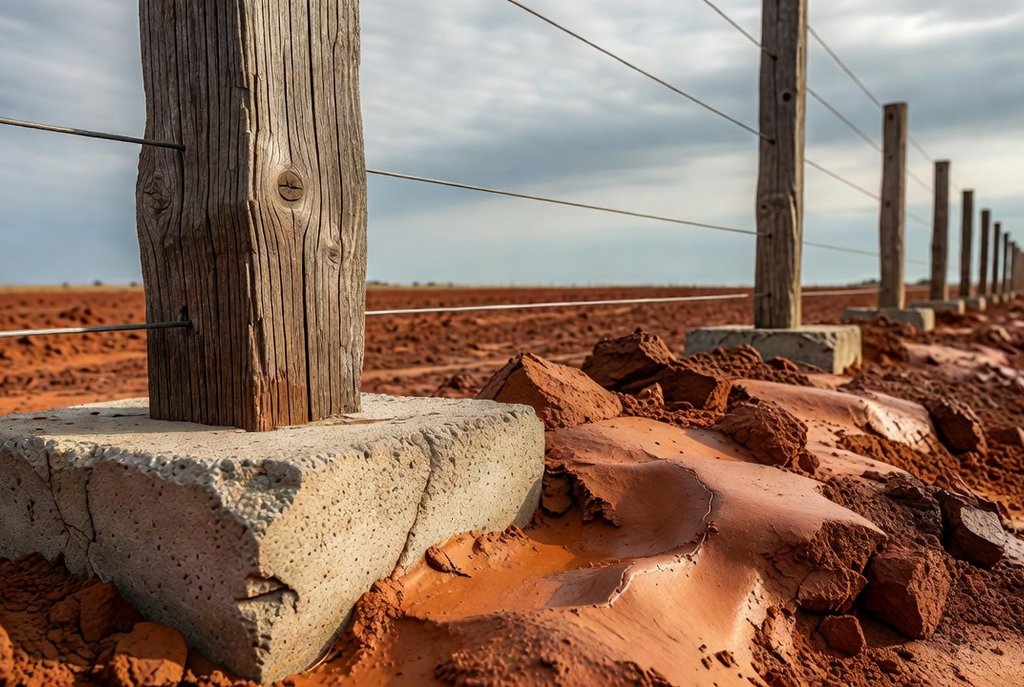
A wood fence looks simple from the street: posts, rails, pickets. In Navasota, the hard part is getting that “simple” to stay straight through heat, humidity, and the kind of rain that shows up fast and leaves even faster. The Brazos Valley’s expansive clay swells when it’s wet and shrinks when it dries, and that movement is what turns a decent-looking new fence into a wavy one if the bones weren’t built right.
This is the practical checklist we use when we’re talking wood fences around Navasota. If you want the quick version of where we work, start here: Navasota service area.
What actually beats up a wood fence in Navasota
Three things do most of the damage here:
- Soil movement (clay): It pushes and pulls on posts year after year. If the post isn’t anchored well, the fence slowly leans and ripples.
- Moisture + humidity: Wood that stays damp (especially near grade) rots faster, and hardware corrodes faster.
- Texas sun: UV dries and checks boards, warps pickets, and cooks cheap finishes right off.
None of that means “don’t build wood.” It just means the details matter more here than in milder climates.
Posts: the part you can’t afford to get casual about
A wood fence lives or dies by the posts. The boards can be replaced later; the posts are the structure.
Straight talk: - Deep, properly formed footings are what keep a fence from slowly walking out of plumb as the ground swells and shrinks. - Consistent layout and bracing matter as much as “strong posts.” A long run needs to act like one system, not a bunch of individual sticks in the ground. - Water management at the base matters. If water routinely ponds along a fence line, posts sit wet and fail sooner. Sometimes the right fix is improving drainage or adjusting the grade before you ever talk about picket style.
And yes: call 811 before any digging. It’s free, and it prevents a fence project from turning into a utility problem.
Choosing wood and a design that makes sense (not just what looks good on day one)
Most homeowners end up choosing between treated pine and cedar for privacy fences.
- Treated pine is the value play. Built right, it performs well, but it benefits from smart design and good maintenance because our sun and moisture are relentless.
- Cedar costs more, but it’s naturally more resistant to weathering and tends to hold up better visually over time.
Design choices that help in our climate: - A cap/top trim can protect end grain and tighten up the look, but it’s not magic. If the underlying fence is weak, a cap just makes a weak fence look nicer. - Picket spacing and airflow matter. A fence that never dries is a fence that ages fast. - Keep wood out of constant ground contact. Dirt piled against pickets traps moisture and invites rot.
If you’re on a property with dogs, equipment, or a lot of in-and-out traffic, it’s also worth thinking through where you actually need full privacy versus where a simpler boundary fence is more practical.
Gates: where bad builds get exposed fast
If you want to know whether a fence was built “for real,” look at the gate after a couple seasons.
Gates fail early when: - the gate posts aren’t built for the load, or - the hardware is undersized, or - the gate opening wasn’t laid out square and braced correctly.
In our clay, a gate also needs room to stay functional when the ground shifts. If the bottom of the gate is set too tight to grade, it doesn’t take much soil movement before it starts dragging.
Finishing and maintenance: what’s worth doing (and what’s wasted effort)
A wood fence here will weather. The goal isn’t to freeze it in time—it’s to slow down the damage.
A few practical tips: - Sealing/staining helps with UV and moisture cycling. It’s not required on day one for every build, but it’s one of the best ways to extend the “looks good” years. - Watch the bottoms first. Clear leaf buildup, keep soil/mulch from creeping up, and fix sprinklers that constantly soak the fence line. - Expect movement in the first year. Wood dries, shrinks, and settles. That’s normal. The question is whether the structure stays straight while it does.
The questions worth asking before you hire anyone
Whether you hire us or someone else, ask these: 1. How are the posts being set for clay soil? 2. What’s the plan for gates (posts, hinges, latches) so they don’t sag? 3. How will water flow along the fence line after it’s built? 4. What wood species and design details fit my use case (privacy, pets, acreage, HOA rules)?
Top-Notch Outdoor Services installs, repairs, and replaces fences and gates across Navasota and the Brazos Valley. If you want an honest recommendation on wood choice and layout for your property, tell us about your fence project or call (979) 286-6555.