Choosing between a wood fence and chain link in Snook, TX isn’t just about looks. Around the Brazos Valley, fences lose fights to shifting clay soil, hard sun, and stormy weather swings—so the “best” fence is usually the one that matches how you’ll actually use the property.
If you’re looking for the quick “where we work” version, start here: our service areas.
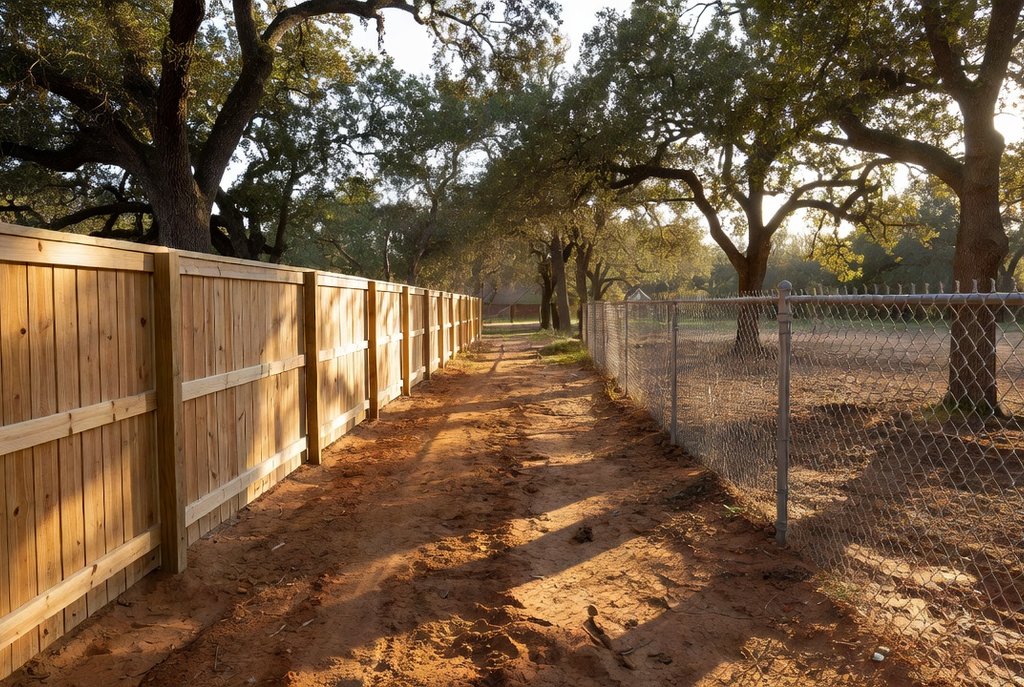
What Snook conditions do to fences (and why it matters)
Straight talk: most fence problems aren’t mysterious. They’re predictable:
- Clay expands when wet and shrinks when dry. That movement slowly pushes posts out of plumb if they’re set shallow or inconsistent.
- Downpours + runoff create soft spots. A fence line that stays damp will shift more and can shorten the life of wood near grade.
- Texas sun cooks wood and bakes the ground. UV causes checking/warping; dry spells open cracks in soil; then rain swells it again.
- Wind loads are real. A solid privacy fence acts like a sail. Chain link lets air through, so it typically takes wind better.
So instead of asking “Which fence lasts longer?” the better question is: Which fence fits the site and the job?
Wood privacy fence: when it’s the right call (and when it isn’t)
Wood is usually chosen for privacy and curb appeal. If you want a visual barrier from the road or neighbors, wood is hard to beat.
Pros in Snook: - Privacy and noise blocking. Solid panels or pickets screen the yard. - Flexible styles. Height, picket type, caps, and trim change the look a lot. - Easy to “tune” the yard feel. Wood can make a property feel finished and contained.
Tradeoffs (don’t ignore these): - More wind stress. If your lot gets open gusts, corners/ends/gate posts need to be built stout. - More maintenance. Sun and humidity are tough on wood. Sealing can help, but it’s still a material that moves and weathers. - Ground contact kills wood. If soil or mulch is piled against pickets, or water sits along the line, rot risk goes up.
Wood tends to make sense when privacy is the priority and you’re okay with periodic upkeep to keep it looking good.
Chain link fence: the practical workhorse choice
Chain link is usually chosen because it’s functional, lower-maintenance, and handles wind well.
Pros in Snook: - Airflow (less “sail effect”). Typically better performance in high winds. - Visibility. Useful if you want to see through the fence (or keep sightlines for animals, kids, or the driveway). - Generally less fussy day-to-day. No boards to warp or cup; mowing/weed-eating along it is straightforward.
Tradeoffs: - No built-in privacy. You can add privacy screens/slats, but that changes wind load and maintenance. - It still depends on post work. If terminal posts and braces aren’t right, you’ll see sagging fabric or a gate that won’t behave. - Aesthetics aren’t for everyone. It’s honest and functional, but not the look some homeowners want.
Chain link is a strong choice when you want containment, durability, and fewer upkeep chores, especially on more open lots.
The part that matters most for either fence: posts, corners, and gates
If you only remember one thing: pickets and fabric don’t hold a fence straight—posts do.
For both wood and chain link in clay soil, pay attention to:
- Consistent post setting. Mixed depths and sloppy alignment create “wavy fence syndrome” later.
- Strong corners and ends. Long runs pull on termination points over time.
- Gate posts sized for leverage. Gates are constant stress, especially if you use them daily.
And a practical reminder before any digging: call 811 to get utilities marked. It’s free, and it prevents a fence project from turning into a dangerous (and expensive) surprise.
Maintenance reality check: what you’re signing up for
Here’s the honest version homeowners appreciate later:
- Wood: expect natural movement as it weathers; plan on cleaning/sealing when it makes sense; keep soil and sprinklers from soaking the bottom edge.
- Chain link: keep vegetation from swallowing the fence line; watch gate hardware; if you add privacy screening, expect more wind stress and more “stuff to maintain.”
Neither option is truly “set it and forget it”—but chain link usually asks for less cosmetic upkeep.
A simple decision checklist (works better than arguing online)
Ask yourself these five questions:
- Do I need privacy—or just a boundary/containment fence?
- Is my lot exposed to wind? (More exposure pushes you toward airflow or heavier structure.)
- How important is the look from the street?
- Am I willing to maintain wood to keep it looking good?
- How will I actually use the gates? (Mower access, trash day access, daily driveway use, pets, etc.)
If you want a straightforward recommendation based on your layout, grade, and how the fence will be used, Top-Notch Outdoor Services installs, repairs, and replaces fences and gates across the Brazos Valley. You can call (979) 286-6555 or schedule a consult.